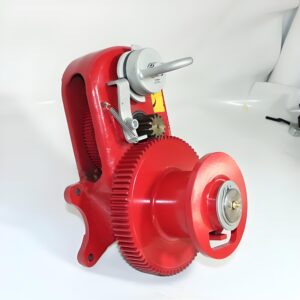
Automatic Watering System
Mila Poultry Breeder Floor Rearing Automatic Watering System is an intelligent and hygienic water supply solution specifically designed for large-scale breeder floor rearing scenarios. Integrating three core functions—precision water supply, water quality assurance, and full-cycle adaptability—it achieves clean, stable, and efficient management of breeders’ drinking water through automated technology, laying a solid “water supply lifeline” for breeders’ healthy breeding and improved reproductive performance.
I. Core Design Concept
Centered on “clean drinking water, growth adaptation, and cost reduction with efficiency improvement“, the system optimizes water flow control, water quality filtration, and equipment adaptability according to the drinking water needs of breeders at different growth stages. It eliminates drinking water pollution and waste, reduces manual intervention, and balances animal welfare with breeding economic benefits, meeting the requirements of standardized breeding in modern breeder farms.
II. Core System Features
1. Full-Cycle Precision Adaptation
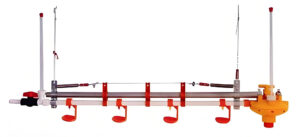
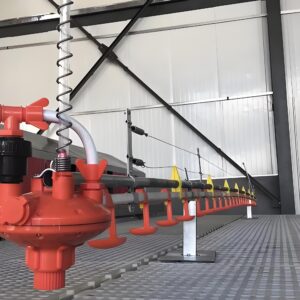
- Height-Adjustable Design: Equipped with electric/manual lifting devices, the water line height can be dynamically adjusted with the breeders’ age (adapted to eye level for chicks and comfortable head-up drinking angle for adult breeders), ensuring convenient drinking for breeders at all stages.
- Intelligent Flow Regulation: Equipped with precision pressure regulators, optimizing water flow parameters according to the breeders’ growth cycle—20-60ml/min for chicks, 90-100ml/min for adult breeders, with automatic fine-tuning in high-temperature summer to meet physiological drinking needs.
- Reasonable Density Configuration: Following the industry standard of 1 drinking nipple for 8-10 breeders, ensuring uniform drinking for the flock and avoiding competition-induced stress.
2. Multiple Water Quality Assurance Systems
- Source Filtration and Purification: Dual filtration devices at the main pipeline and house water inlet end, accurately intercepting impurities and particles. The filter element can be quickly disassembled and replaced to prevent nipple clogging and secondary water pollution.
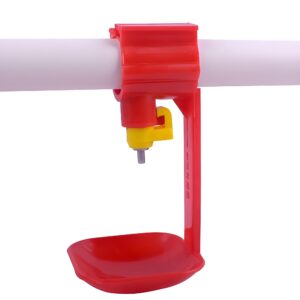
- Safe and Harmless Materials: The water pipes are made of food-grade PP material, and the nipple drinkers are made of thickened 304 stainless steel, featuring corrosion resistance, UV resistance, and no harmful substance leaching, complying with FDA and REACH certification standards.
- Convenient Cleaning and Maintenance: Supports automatic/manual flushing functions to regularly clean biofilms on the inner wall of the water line. Equipped with an end exhaust valve to avoid pipeline air resistance and residual water, reducing the risk of bacterial growth.
3. Efficient Energy Saving and Hygienic Design
- Leak-Proof and Water-Saving Structure: Adopts a 360° sealed nipple design that only dispenses water when pecked by breeders. Compared with traditional water troughs, it saves more than 40% water, reduces litter moisture pollution, and improves the hygiene environment of the chicken house.
- Perch-Proof and Pollution-Prevention Design: Equipped with perch-proof wires or roller devices above the water line to prevent breeders from standing on the water supply system, ensuring the cleanliness of the water source.
- Modular Assembly: The system adopts a modular structure for easy installation and disassembly, which can be flexibly expanded according to the house scale, adapting to the feeding needs of 10,000-50,000 sets of breeders per house with low maintenance costs.
III. Core Advantages
- Breeder Health Assurance: A clean and stable drinking environment reduces the incidence of digestive and respiratory diseases, enhances breeders’ immunity and stress resistance, and lays the foundation for high fertilization and hatching rates.
- Breeding Efficiency Improvement: Automated water supply reduces the workload of manual water refilling, cleaning, and adjustment by more than 30%, while avoiding water waste and the decline of feed conversion rate.
- Wide Application Adaptability: Compatible with various floor rearing layouts such as litter areas and slatted areas, and can be customized with pipeline insulation or moisture-proof design according to different climatic conditions such as cold protection in northern regions and moisture-proof in southern regions.
- Long Equipment Service Life: The moisture-resistant and corrosion-resistant material and structural design adapt to the high-humidity environment of chicken houses, with an equipment service life of 8-10 years and outstanding cost performance.
IV. Application Scope
Specifically designed for large-scale breeder floor rearing farms, it adapts to the full-cycle breeding of breeders including brooding, rearing, and laying stages. It can be customized according to the site scale, breeding density, and climatic conditions, and is one of the core equipment for modern breeder farms to achieve biological safety closed-loop and efficient breeding.
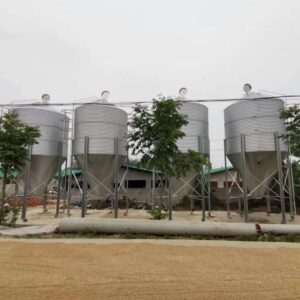
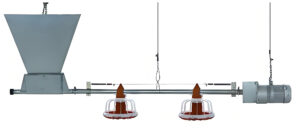
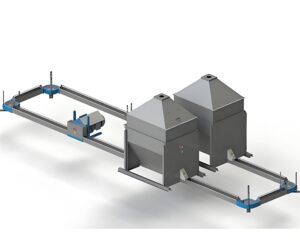
Automatic Feeding System
Mila Poultry Breeder Floor Rearing Automatic Feeding System is a precision and intelligent feeding solution specifically designed for large-scale breeder floor rearing scenarios. It deeply integrates separate gender feeding technology, intelligent control algorithms, and automated conveying systems to achieve precise feed distribution, growth rhythm adaptation, and breeding cost optimization. It lays a core foundation for improving breeder weight uniformity and enhancing reproductive performance, serving as a key equipment for standardized breeding in modern breeder farms.
I. Core Design Concept
Centered on “precision feeding, gender adaptation, and efficient feed saving“, the system addresses the differences in growth needs between male and female breeders and the characteristics of full-cycle nutritional adaptation. Through independent feeding line design, intelligent flow control, and data-driven management, it eliminates feed waste and uneven feeding. While implementing strict feed restriction, it ensures animal welfare, balances breeding efficiency and economic benefits, and meets the core requirements of modern breeding for “precision, traceability, and low loss”.
II. Core System Features
1. Exclusive Design for Separate Gender Feeding
- Dual Independent Feeding Line Structure: The female feeding line adopts chain/pan conveying, equipped with limit grilles with 44mm spacing above the trough, allowing only females to peck for feed and completely blocking males from snatching; the male feeding line is an independent liftable pan/chain system, adjustable to a height inaccessible to females, delivering high-protein special feed separately.
- Gender-Specific Parameter Adaptation: The female feeding line flow is precisely controlled at 30-50g/bird·time to meet feed restriction needs; the male feeding line adopts high-speed conveying technology (up to 36m/min) to ensure instant uniform feed distribution, reducing feeding stress and fighting.
- Flexible Switching Function: Supports feeding line modification, enabling flexible conversion between male and female feeding lines by replacing grilles or adjusting height, adapting to changes in site breeding plans.
2. Full-Cycle Intelligent Control
- Growth Stage Adaptation: Integrates a 6-8 speed adjustable motor, dynamically adjusting feeding frequency and single feeding amount according to the full-cycle growth rhythm of breeders (brooding, rearing, and laying stages). It emphasizes uniform feeding for chicks and precise weight control for adult breeders.
- Real-Time Data Linkage: Optional precision weighing system and feed level sensors real-time monitor feed consumption and flock feeding speed, automatically adjusting feeding strategies through the central controller to ensure the weight uniformity compliance rate ≥90%.
- Environment-Adaptive Regulation: Links with the environmental control system, automatically adjusting feeding time (avoiding midday high temperatures) and increasing morning and evening feeding frequency in high-temperature periods to ensure feeding efficiency; optimizes feed conveying speed in humid environments to reduce mildew risk.
3. Efficient Feed Saving and Hygienic Design
- Low-Loss Conveying Structure: Adopts V-shaped corrugated feed pans, sealed feed pipes, and precision feed dividers, controlling feed spillage rate below 2%, saving 8%-10% feed compared to traditional feeding systems, and significantly optimizing feed-egg ratio and breeding costs.
- Convenient Cleaning and Maintenance: Feed pans/troughs are made of food-grade engineering plastic and 304 stainless steel, with smooth surfaces and no residue, supporting quick disassembly and cleaning; the feed hopper features a transparent design for real-time observation of feed level and status, ensuring feeding hygiene.
- Perch-Proof and Pollution-Prevention Design: Equipped with perch-proof wires or roller devices above the feeding line to prevent breeders from standing and polluting feed; the chain adopts a self-cleaning structure to reduce feed residue and bacterial growth.
4. Modular and Adaptive Design
- Flexible Layout and Installation: Supports both suspended and vertical installation methods. Feeding lines can be evenly distributed along the length of the chicken house, adapting to various floor rearing layouts such as litter areas and slatted areas. A single system covers an area of up to 113㎡, meeting the feeding needs of 1,500 females or 1,000 males.
- Large-Scale Expansion Capability: Adopts a modular assembly design, allowing flexible increase or decrease of feeding line units and pan quantities according to the breeding scale of 10,000-50,000 sets per house, with easy installation and disassembly and low maintenance costs.
- Compatibility with Multiple Feed Types: Adapts to different textures of feed such as pellets and crumbles, ensuring feed integrity and avoiding breakage and waste by adjusting conveying speed and feed distribution structure.
III. Core Advantages
- Significantly Improved Weight Uniformity: Precision feeding and uniform distribution technology control the flock weight variation coefficient within 8%, laying a foundation for stable high fertilization rate (over 95%) and hatching rate.
- Greatly Optimized Breeding Efficiency: Automated feeding reduces manual intervention, enabling one person to manage 50,000-60,000 breeders, reducing labor costs by more than 60%; feed utilization rate increases by 8%-10%, and the feed-egg ratio is optimized to below 2.8:1.
- Continuously Enhanced Reproductive Performance: Gender-specific nutritional supply and low-stress feeding environment ensure male vitality and female egg quality, increasing qualified hatching egg rate by 5%-8% and extending breeder service life.
- Significantly Reduced Operation and Maintenance Costs: Wear-resistant materials and streamlined structural design ensure an equipment service life of 8-10 years; modular maintenance and easy-to-clean features reduce failure rates and maintenance man-hours.
IV. Application Scope
Specifically designed for large-scale breeder floor rearing farms, it adapts to the full-cycle feeding of breeders including brooding, rearing, and laying stages. It can be customized according to site scale, breeding density, and climatic conditions, meeting cold-proof needs in northern regions and moisture-proof needs in southern regions. It is suitable for a single-house breeding scale of 10,000-50,000 sets, and is a core equipment for breeder farms to achieve precise management and cost reduction with efficiency improvement.
Housing Layout Introduction
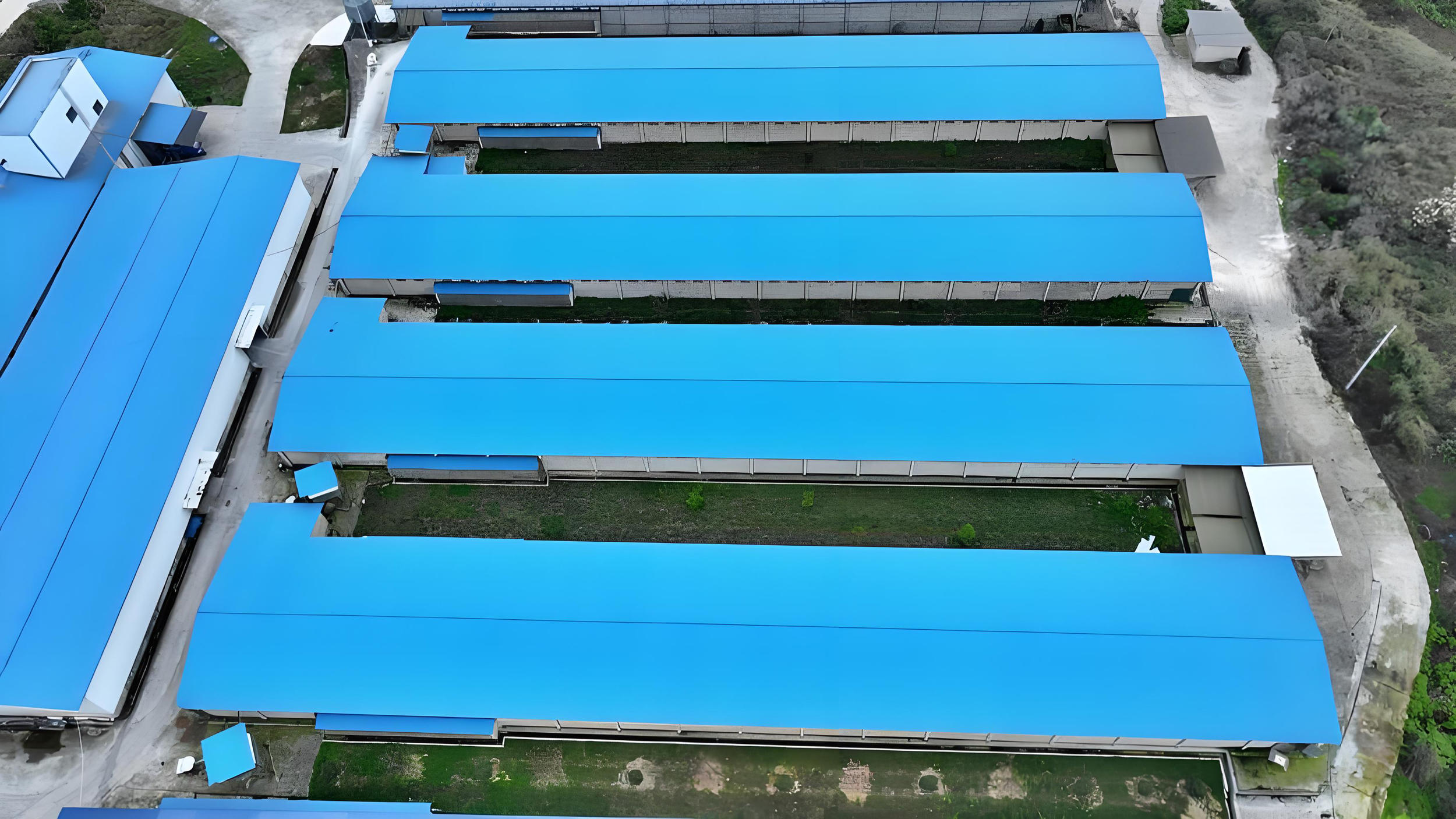
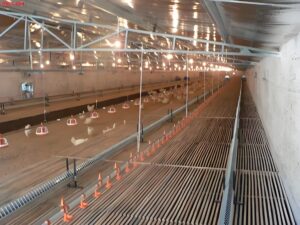
The housing layout of Mila Poultry Breeder Floor Rearing System is centered on the core design concept of “clear functional zoning, welfare adaptation, high efficiency and cleanliness, and full-cycle compatibility”. It constructs a scientific three-in-one layout structure of “litter area + slatted area + nesting area”, deeply integrating the natural growth habits of breeders with the needs of large-scale breeding management. It realizes precise zoning and efficient coordination of activity space, feeding and drinking, and breeding and egg-laying, laying a solid foundation for the healthy breeding of breeders, the optimization of reproductive performance, and the improvement of breeding benefits.
1. Litter Area (Core Area for Natural Activities)
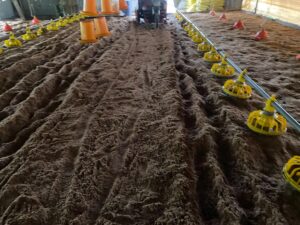
As the core area for breeders’ free movement, resting, and natural mating, it accounts for 60%-70% of the total house area and is crucial for ensuring animal welfare:
- Space Configuration: The litter area of a single house adopts a regular rectangular layout, with a horizontal width of 8-12m and a vertical extension along the entire length of the house, ensuring no crowding for the flock’s activities and no space restrictions for natural mating between males and females;
- Litter Specifications: Lay mixed dry litter such as rice husk and sawdust, with an initial thickness of 8-10cm, gradually supplemented to 12-15cm during the rearing period. Regularly maintain it through mechanical turning devices to keep the litter moisture content ≤25%, reducing foot diseases and skin infections;
- Auxiliary Facilities: Uniformly distribute dust bathing pits (1 pit for every 100 breeders, 1.5m×0.8m×0.3m), filled with clean river sand and a small amount of shell powder to meet the breeders’ dust bathing and cleaning needs; set up low perches (height 30-40cm) to provide resting space and avoid long-term compaction of litter;
- Sanitation Control: Set a 5-8cm high diversion slope at the junction of the litter area and other areas to prevent backflow of manure and sewage. Regularly clean up accumulated dirt in corners to keep the area clean.
2. Slatted Area (Core Area for Feeding and Drinking)
Located on both sides of the house, it serves as an exclusive area for feeding and drinking, accounting for 20%-25% of the total house area, balancing sanitation control and feeding efficiency:
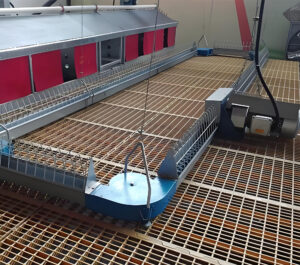
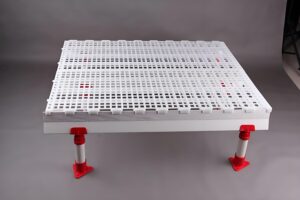
- Structural Design: Adopt an elevated slatted structure, with the slats 50-60cm above the ground, leaving space for manure cleaning underneath. The mesh size is 2.5cm×2.5cm, ensuring smooth manure falling while preventing breeders’ feet from getting stuck;
- Feeding System: Lay 2-3 sets of separate male and female feeding lines parallel to the length of the slatted area. The female feeding lines are equipped with limit grilles, and the male feeding lines have an independent lifting design, evenly distributed (adapting to 8-10 breeders per meter of feeding line);
- Watering System: Arrange 2-3 suspended nipple drinking lines parallel to the feeding lines, configured according to the standard of 1 drinker for 8-10 breeders, with height adjustable dynamically with age;
- Regional Connection: A gentle slope transition (slope ≤30°) is adopted between the litter area and the slatted area to facilitate free movement of breeders. The transition area is 1.2-1.5m wide to avoid crowding and trampling;
- Manure Cleaning Coordination: Equip automatic manure belts or scrapers under the slatted area, accurately connected to the slatted area, to clean manure regularly every day, reducing ammonia accumulation and bacterial growth.
3. Nesting Area (Exclusive Breeding Area)
As an exclusive area for breeders to lay eggs, it accounts for 10%-15% of the total house area and directly affects egg quality and egg production rate:
- Layout Location: Concentrated in the middle or wall areas on both sides of the house, away from feeding and drinking areas and manure cleaning channels to avoid noise and pollution interference;
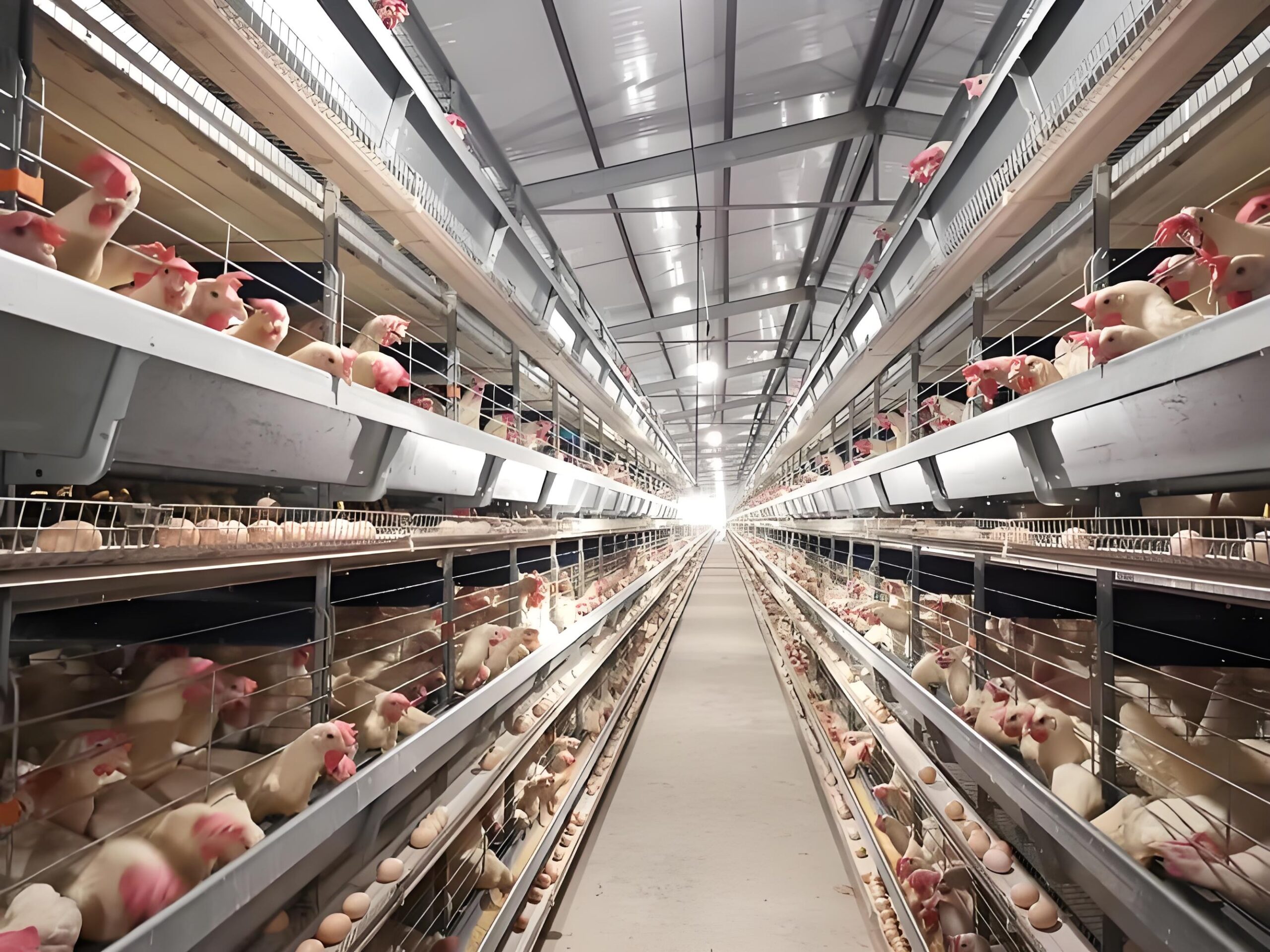
- Nesting Box Configuration: Adopt multi-layer independent nesting boxes (height 35-40cm per layer), evenly distributed according to the standard of 1 nesting box for every 5-6 females. The nesting box doors are shaded, and soft litter (such as straw, non-woven fabric) is laid inside to improve egg-laying comfort;
- Egg Collection Coordination: Connect automatic egg collection belts under the nesting boxes with an inclination angle of 3-5° to ensure stable transportation of hatching eggs to the egg collection point at the end of the house, reducing egg breakage (breakage rate ≤1%);
- Environmental Control: Equip the nesting area with independent ventilation branches and light control devices to maintain a temperature of 18-24℃ and a light intensity of 10-15lux, creating a quiet and comfortable egg-laying environment.
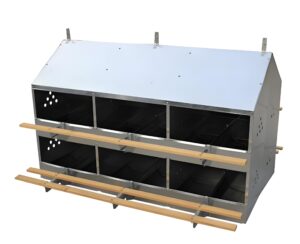
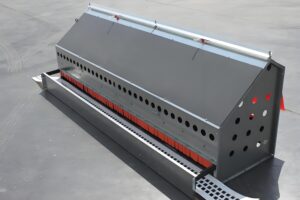
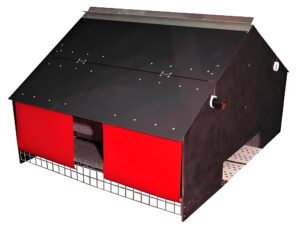
Egg Collection System
Mila Poultry Breeder Floor Rearing Egg Collection System provides two differentiated solutions—manual egg collection and full-automatic egg collection—based on the egg-laying characteristics of breeders in floor rearing mode. Both are compatible with the “litter area + slatted area + nesting area” layout structure, with the core goals of “ensuring hatching egg quality, adapting to breeding scale, and reducing operation intensity”. They meet the production needs of breeder farms of different sizes and provide support for improving the qualified rate of hatching eggs and breeding benefits.
Core Parameter Comparison of Two Egg Collection Methods
| Comparison Dimension |
Manual Egg Collection System |
Full-Automatic Egg Collection System |
| Suitable Breeding Scale |
Single house ≤5,000 sets |
Single house 10,000-50,000 sets |
| Hatching Egg Breakage Rate |
≤2% |
≤1% |
| Hatching Egg Qualified Rate |
≥95% |
≥98% |
| Labor Requirement |
1 person/house·day (2-3 collections) |
1 person can manage 3-5 houses·day |
| Initial Investment |
Low |
Medium-High |
| Operation and Maintenance Cost |
Low (only labor cost) |
Medium (electricity fee + regular maintenance) |
| Core Advantages |
Flexible, low cost, simple maintenance |
Efficient, intelligent, low stress, high return |